Independent woodworking research · For US buyers
DRUMSANDER .net

The woodworking machine guide

Drum sander choices.
Built around your work.

Compare the working width, stock limits and shop requirements that matter. Find the machine—and the complete setup—for the boards you actually make.

By John Morris · Manufacturer-based research

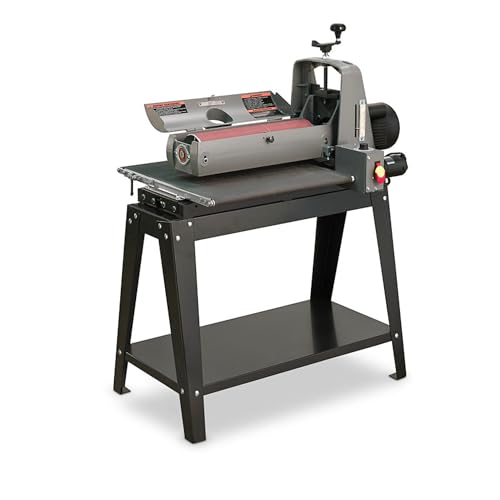
Machine spotlight · Open-endedJET JWDS-1632 woodworking drum sander with stand

JET JWDS-1632

16-inch single-pass width. Documented capacity up to 32 inches using two passes. Check the exact stock and setup limits.

As an Amazon Associate I earn from qualifying purchases. “Check Amazon” links are affiliate links.

Start with the right machine type

What does a drum sander do?

A woodworking drum sander moves suitable stock on a conveyor beneath a rotating abrasive drum. It offers controlled abrasive surfacing for prepared boards, glued panels and some difficult-grain work. Choosing one begins with the process you need, not just a maximum width.

This guide focuses on woodworking conveyor machines. A walk-behind floor drum sander works on installed flooring; a spindle sander handles a different set of shaping tasks. Their instructions and accessories are not interchangeable.

Understand the three machine types

Before you buy

Write down your common board width, thickness and length. Then check the exact machine’s permitted stock envelope, supporting surface, circuit and dust-collection requirements.

A machine that passes a dimensional check may still be wrong for a fragile, warped or poorly supported workpiece. The Finder makes those limits visible and excludes missing specifications.

Read the stock-limit guide

A useful first shortlist

Compare drum sander capacity

Explore every model guide

These figures come from model-specific documentation. Two-pass capacity requires the manufacturer’s alignment and operating method. It is not automatically twice the advertised drum size.

As an Amazon Associate I earn from qualifying purchases. “Check Amazon” links are affiliate links.

MachineSingle passTwo passesStock thicknessOffer
JET JWDS-1020 drum sander10 in20 in0.03125–3 inCheck Amazon
JET JWDS-1632 drum sander16 in32 in0.03125–3 inCheck Amazon
SuperMax 16-32 drum sander16 in32 in0.03125–3 inCheck Amazon
SuperMax 19-38 drum sander19 in38 in0.03125–4 inCheck Amazon
Powermatic PM2244 drum sander22 in44 in0.03125–4 inCheck Amazon

Open the model guide for source documents, minimum length and setup limits. Prices, sellers and package contents are checked at Amazon.

Three practical starting points

Match capacity to the work you repeat

01

Compact projects

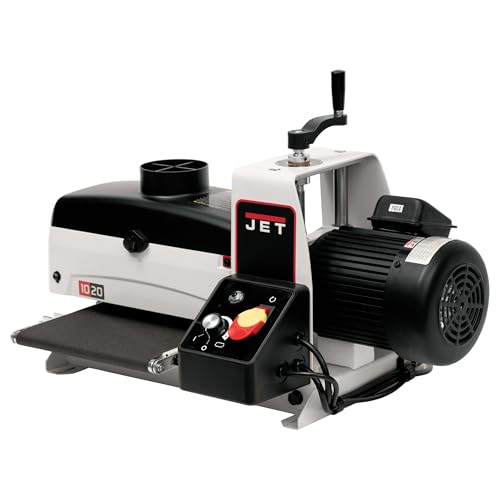
If your boards fit a compact machine, look closely at the JET JWDS-1020’s documented capacity. Include a stable supporting surface, collection and outfeed space in the comparison.

02

Prepared boards and panels

The JET JWDS-1632 and SuperMax 16-32 occupy a useful comparison group. Read the exact controls, stock limits and setup requirements rather than treating similar names as identical machines.

03

Wider recurring work

Compare the SuperMax 19-38 and larger models when your actual projects need their documented width. A larger purchase also changes handling, footprint and collection requirements.

As an Amazon Associate I earn from qualifying purchases. “Check Amazon” links are affiliate links.

JET JWDS-1020 drum sander
Machine to compare

JET JWDS-1020 drum sander

Compare the documented machine capacity, shop requirements and exact offer.

Single-pass width
10 in
Two-pass limit
20 in

Confirm current US model, package contents and the operator manual. A size match is not a safety approval.

Check Amazon
SuperMax 16-32 drum sander
Machine to compare

SuperMax 16-32 drum sander

Compare the documented machine capacity, shop requirements and exact offer.

Single-pass width
16 in
Two-pass limit
32 in

Confirm current US model, package contents and the operator manual. A size match is not a safety approval.

Check Amazon
SuperMax 19-38 drum sander
Machine to compare

SuperMax 19-38 drum sander

Compare the documented machine capacity, shop requirements and exact offer.

Single-pass width
19 in
Two-pass limit
38 in

Confirm current US model, package contents and the operator manual. A size match is not a safety approval.

Check Amazon

How to choose the best drum sander for your shop

Separate width from stock suitability

The drum label, usable single-pass width and documented two-pass limit are separate facts. Measure the piece you need to process, including its shortest length and thinnest stage. A minimum thickness is not blanket permission to feed loose veneer without the required support.

Budget for the whole system

Dust collection, duct connections, abrasives, work support and any required shop work belong in the purchase decision. Port diameter alone does not tell you whether a collector can deliver the required airflow through your actual system.

Compare the operation you need

A planer is generally the first machine to investigate for suitable bulk thickness removal. A drum sander earns consideration when prepared stock, glue-ups or difficult grain create repeated abrasive work. A wide-belt machine or outside sanding service can be a different solution for larger jobs.

Understand the abrasive system

Pre-cut wraps, bulk rolls, backing materials and conveyor belts are different products. Match the exact model generation, dimensions and attachment method. A conveyor belt’s abrasive-looking surface provides feed traction; it does not replace the sanding wrap.

Make uncertainty part of the shortlist

A marketplace title is not a substitute for an operator manual. Some model documentation conflicts or leaves important limits unresolved. We keep those gaps visible and leave affected machines out of automatic matches until the required facts are established.

Evaluate your own material

Before a major purchase, ask a dealer to demonstrate suitable samples of your actual work. Look at thickness consistency and the sanding pattern, and account for later finish preparation. Our guides explain specifications and tradeoffs; they do not claim hands-on performance tests.

Put your dimensions to work

All buying tools

Drum Sander Capacity Finder

Match your board width, thickness and length to documented drum sander limits. See machines with product images and Amazon offer links.

Drum Sander Abrasive Finder

Find model-labeled abrasive wraps and conveyor belts. Check exact machine compatibility before buying sanding consumables.

Drum Sander Feed-Time Calculator

Estimate conveyor travel time from board length, feed speed and passes. Separate feed time from setup and handling for a realistic plan.

Build a complete understanding

Drum Sander Buying Guides

Choose a drum sander around working width, shop space, dust collection and budget. Use practical buying guides to plan your complete setup.

Drum Sander Comparisons

Understand drum sanders versus planers, wide-belt machines and other sanders, plus open-ended, oscillating and double-drum designs.

Drum Sander Setup & Technique

Understand stock limits, sanding passes, material choices and shop setup using manufacturer-based drum sander guidance.

Drum Sander Troubleshooting

Diagnose burning, snipe, tracking, slipping and uneven sanding. Follow documented checks and know when a machine needs qualified service.

Drum Sander Care & Maintenance

Keep abrasive wraps, conveyor belts and dust paths in good condition with source-based cleaning, calibration and maintenance guidance.

When sanding does not go to plan

Burning, snipe, tracking and uneven thickness have different possible causes. Stop and inspect the evidence before repeating a bad pass. Our troubleshooting guides start with the symptom and point you back to exact-model procedures.

Deciding between two machines?

Compare the models on your shortlist

Explore exact-model head-to-head guides, same-brand upgrades, abrasive choices and production-shop configurations. Compare documented limits and see both Amazon offers in each product comparison.

Browse every drum sander comparison

Questions, answered

What is a drum sander good for?

A woodworking drum sander is useful for controlled abrasive surfacing of prepared boards, glue-ups and suitable figured wood. It can help bring appropriate stock toward a target thickness, but it does not automatically flatten twisted boards or replace every stock-preparation operation. Floor drum sanders are a different category.

Is a drum sander worth the money?

It can be worthwhile when repeated panel or difficult-grain sanding is a real bottleneck. Compare your recent projects, available shop space, extraction requirements and consumable costs. If the work is occasional, outsourcing the sanding may be more economical than owning a machine.

Is a drum or orbital sander better?

For woodworking, a conveyor drum sander processes suitable flat stock at controlled thickness; a handheld random-orbit sander is used for surface preparation on a much wider range of assembled shapes. For floor refinishing, this comparison refers to different floor machines. Do not transfer conveyor-sander instructions to flooring equipment.

What is the best drum sander to buy?

The best choice depends on actual working width, permitted stock dimensions, power, collection and budget. Compare documented JET, SuperMax and other exact-model capacities below. A bigger drum or higher advertised horsepower is not enough to establish the best machine for your work.

Do you push or pull a drum sander?

On a woodworking conveyor drum sander, use the manufacturer’s infeed method and let the conveyor control travel. Do not pull a stalled board through an operating machine. Push-versus-pull advice for a walk-behind floor sander is a different question and must follow that floor machine’s instructions.

What can I use instead of a drum sander?

Depending on the job, alternatives include a thickness planer for suitable bulk stock removal, a wide-belt sanding service for large panels, or handheld sanding for surface preparation. These processes are not interchangeable. Decide whether the problem is thickness, flatness, scratch removal or access to a finished assembly.

Can you go backwards with a drum sander?

Do not reverse-feed a woodworking drum sander unless its exact instructions explicitly permit the operation. Its conveyor, feed direction and guarding are designed as a system. Advice about walking a floor sander backward does not apply to feeding boards through a shop machine.

What is the easiest sander to use?

There is no universally easiest sander. A handheld tool may suit a small surface task, while a conveyor machine can make repeated suitable panel work more consistent after setup and training. Choose for the material, geometry and operation rather than assuming a large machine is easier or safer.

Should I get a planer or a drum sander?

If the main task is removing substantial excess thickness from suitable rough stock, a planer is generally the first machine to investigate. If you already have prepared boards and need gradual abrasive work on glue-ups or difficult grain, a drum sander may address the remaining bottleneck. Neither creates a reference face automatically.

What is the best affordable drum sander available?

Compare complete setup cost, not just the machine price. A compact machine may be enough for your work, but extraction, stand, abrasives and stock limits can change the value. Inspect current offers for the JET JWDS-1020 and other compact machines, and use documented capacity rather than a blanket budget winner.

How hard is it to use a drum sander?

A drum sander requires correct setup, abrasive installation, supported stock, collection and controlled light passes. The feed mechanism does not remove the need for training or the exact manual. Start with suitable scrap and do not learn by sacrificing a finished project or overriding a stock limit.

Why are drum sanders so expensive?

A conveyor drum sander combines a supported rotating drum, feed conveyor, height adjustment and a structure that must hold alignment under sanding loads. Larger capacity and additional mechanisms add complexity. Price still does not establish fit: compare documentation, support and total ownership needs.

What is the best benchtop drum sander?

The best benchtop drum sander is the one whose documented stock envelope and installation needs fit your projects. Compare the JET JWDS-1020 with the source-based WEN and Grizzly guides; exact Amazon offers are not available for every researched model. Check the support surface and dust requirements as carefully as width.

What is the best benchtop sander?

Benchtop sander describes several machines, including belt/disc, spindle and conveyor drum designs. Choose the machine type first. A spindle sander for curved edges is not a substitute for a conveyor drum sander used on suitable flat boards and panels.

What do you use a benchtop sander for?

The use depends on the design. Belt/disc and spindle machines commonly serve edge or shape work; a benchtop conveyor drum sander passes suitable stock beneath an abrasive drum for controlled surfacing. Check the machine category and manual before using a general benchtop-sander recommendation.

Are drum sanders worth the money?

Drum sanders can justify their cost when your recurring work needs their specific abrasive capacity. Estimate machine, dust collection, work support and ongoing abrasive costs, then compare that investment with prepared-stock or outsourced-sanding options. A purchase is not automatically worthwhile merely because it saves some sanding time.

Sources behind this guide

Model guides provide additional exact-machine sources. Read our research method for the limits of this specification-based guidance.