comparisons
Drum Sander vs Planer: Which Should You Buy?
A thickness planer is usually the more useful first purchase for milling solid lumber to thickness. A drum sander becomes compelling when your recurring problem is abrasive thicknessing, difficult grain, or wide glued panels. They overlap in thickness control, but their removal methods and practical jobs differ.
As an Amazon Associate I earn from qualifying purchases. “Check Amazon” links are affiliate links.
A relevant product to inspect

Check exact model, included equipment and current seller details.
Check AmazonStart with the material you buy
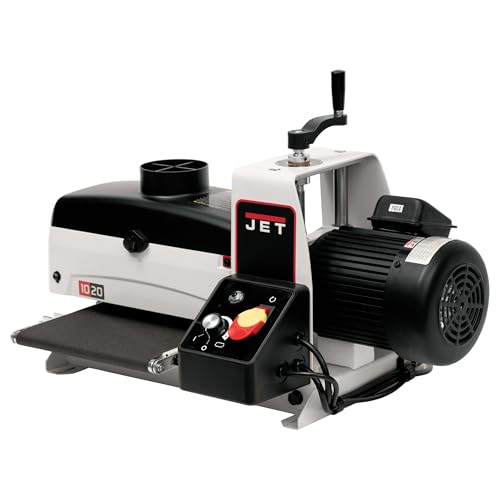
A planer uses a cutterhead; the DEWALT DW735 is one manufacturer example with a three-knife head. A drum sander feeds material beneath a rotating abrasive-covered cylinder. That difference matters more than comparing motor horsepower across the two categories. Cutting away substantial excess stock and sanding away fine surface imperfections are different tasks.
If most projects start with rough boards, budget for a way to establish a reference face before either machine. A thickness planer references the face below the cutterhead; a conveyor drum sander likewise needs appropriate support beneath the work. Neither should be purchased on the assumption that feeding a twisted board through repeatedly will reliably make it flat.
Where the drum sander earns its place
An abrasive machine can be useful when grain reversals make knife cutting difficult, and when a glued panel exceeds the planer opening. It also permits gradual work near a target thickness. Those advantages do not make every thin piece suitable: minimum thickness, minimum length, work holding, and permissible carrier methods remain model-specific.
Consider a furniture maker who planes individual boards, glues them into a panel, and then sands the assembled face. The two machines serve consecutive stages. By contrast, someone mainly making construction lumber shelves may gain little from a drum sander until repetitive sanding becomes the actual bottleneck.
What the purchase will not solve
A drum-sanded surface still contains an abrasive scratch pattern. Plan for subsequent surface preparation appropriate to the finish; do not assume the thicknessing pass is the last sanding step. Likewise, a clean planer surface can still need finishing preparation. Choose the process by the finished part, not by whether the machine produces a visually smooth board.
Avoid comparing a planer maximum cut specification with a drum sander handwheel increment as if they describe equal removal capacity. Sanding performance depends on wood, contact width, grit, abrasive condition, feed rate, and extraction. Published capacity does not supply a credible universal minutes-per-board estimate.
Check the complete product offer
Affiliate link. Confirm the version, specifications and included accessories before purchase.
Check AmazonA buying decision you can defend
List your last ten projects and mark the hours spent removing bulk stock, correcting torn grain, and sanding glue-ups. If bulk thicknessing dominates, investigate a planer first. If you already have prepared stock and repeat abrasive work on similarly sized pieces, investigate a drum sander. Include collection, work support, and consumables in either budget.
Before ordering, ask a dealer to demonstrate your actual wood at the intended width and target finish. Request thickness measurements and inspect under raking light. This is a suggested evaluation method, not a claim that we tested either machine. If the two jobs occur only occasionally, outsourcing one operation may be more useful than squeezing both machines into an unsuitable shop.
Compare the stock you actually buy
If your supplier can deliver lumber close to final thickness, compare that service cost with the machinery and shop time it replaces. Your buying decision may change substantially when the starting material changes. Record the intended starting thickness and final thickness for each common job so the comparison reflects your workflow.
Questions, answered
Can a drum sander replace a planer?
For some shops using already prepared stock, yes. It is generally an inefficient substitute when the main job is removing substantial thickness from rough lumber.
Which machine makes a board flat?
Neither automatically removes twist or cup simply by repeated feeding. Begin with an appropriate reference face or a manufacturer-permitted support method.