comparisons
Drum Sander vs Wide Belt for a Wood Shop
A drum sander often fits intermittent furniture work; a wide-belt machine deserves attention when repeated panel sanding consumes paid production time. The useful comparison is the installed process, including utilities and handling, rather than the sanding head alone.
As an Amazon Associate I earn from qualifying purchases. “Check Amazon” links are affiliate links.
A relevant product to inspect

Check exact model, included equipment and current seller details.
Check AmazonUnderstand the sanding assemblies
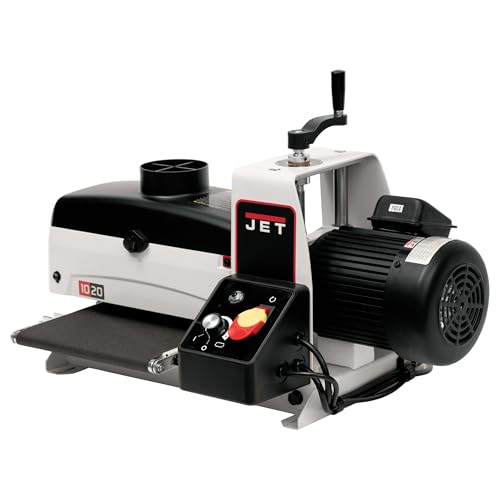
A conventional drum sander carries a strip wrapped around its sanding drum. A wide-belt sander runs an endless abrasive belt through a larger sanding assembly. Wide-belt models differ: some use a contact drum, while others add a platen. Grizzly describes its G0445 as a combination drum-and-platen design. Do not assume every wide belt offers the same finishing behavior.
Ask which head arrangement suits your work: calibration, surface refinement, or both. A specification saying only sanding width leaves out how the abrasive contacts the panel and how the machine must be adjusted between jobs. A model intended for a different material mix may be a poor fit even when it has ample capacity.
Compare batches rather than single passes
Production value comes from the whole batch: staging panels, changing grit, adjusting the machine, feeding, inspecting, and restacking. A machine with a faster conveyor can still disappoint if the operator spends most of the day moving work around a crowded room. Map the flow before paying for throughput.
For intermittent one-off work, a drum sander can justify a slower process because its installation and daily use may be simpler. For recurring cabinet components, ask suppliers for a demonstration using an entire representative batch. Record setup time and the surface preparation still needed afterward. Do not infer hourly output solely from the feed-speed range.
Utilities can decide the comparison
Read the exact electrical and compressed-air requirements before choosing a wide belt. As an example of a requirement buyers might overlook, Grizzly lists pneumatic belt tracking and a 75 PSI air requirement for the G0408. That is a model-specific example, not a requirement shared by every machine in the category.
Allow for the collector, duct system, compressor where required, delivery route, and service access. Confirm voltage and phase with the actual machine identification and manual. A used industrial sander that appears inexpensive can require infrastructure that changes the entire economics of the purchase.
Check the complete product offer
Affiliate link. Confirm the version, specifications and included accessories before purchase.
Check AmazonCompare consumables and support
Ask how many abrasive belts or wraps are needed for your typical grit sequence and how each is changed. Check supplier availability, storage needs, and replacement parts for tracking and feed components. A cheaper abrasive unit price is not meaningful without considering useful work completed and the surface left behind.
Request written installed quotes for each serious option. Include freight handling, initial abrasives, support equipment, utility work, and training. Then compare those totals with the cost of outsourcing your actual monthly panel volume. Choose a wide belt when verified process gains justify its demands; choose a drum sander when it addresses the work without creating a larger installation problem. Neither category guarantees flatness, finish quality, or a particular return on investment.
Ask about service logistics
Before buying either machine, ask who supplies service locally, which adjustments an owner is expected to perform, and how long common replacement components take to obtain. For paid production, an unavailable tracking or feed component can matter more than a modest difference in purchase cost.
Questions, answered
Is a wide belt always better for finish sanding?
No. Head design, platen configuration, abrasive choice, setup, and the workpiece all matter. Compare the exact machines using representative work.
Does every wide belt need compressed air?
No universal rule applies. Some models use pneumatic tracking or tensioning; check the exact manual and utility specification.