comparisons
Benchtop vs Stand-Mounted Drum Sanders
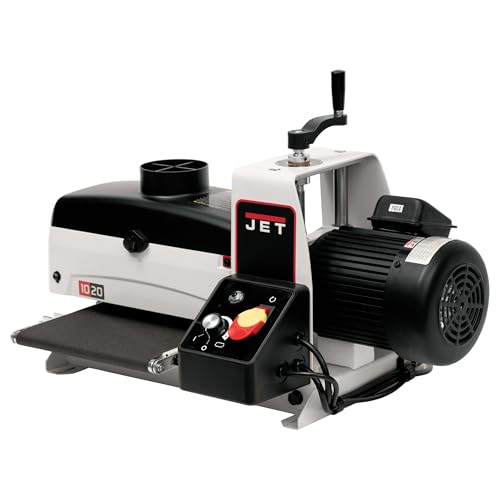
A benchtop drum sander can suit compact work, but the bench becomes part of the machine installation. A stand-mounted model supplies a dedicated working station. Compare the complete footprint and handling arrangement before treating benchtop as a synonym for portable or space-saving.
As an Amazon Associate I earn from qualifying purchases. “Check Amazon” links are affiliate links.
A relevant product to inspect

Check exact model, included equipment and current seller details.
Check AmazonMeasure the operating footprint
Start with the machine body, then add room for the longest stock on both sides and access to controls and covers. A compact sander placed in the middle of a crowded bench can consume more useful work surface than a dedicated stand beside it. Sketch the operating position and the stored position separately.
Consider where incoming and finished pieces will wait. A project involving many identical panels needs staging room even if each panel is short. The useful footprint includes the person feeding the machine, the person receiving work if applicable, and the route between the sander and the next operation.
Treat the support as a specification
For a benchtop machine, confirm mounting instructions, machine weight, and the support needed under load. A spare tabletop is not automatically a suitable base. Check working height with the machine installed; placing a machine on a standard-height bench may produce an awkward feed height for your stock.
For a supplied stand, identify what is included and what is optional. Extension tables, leveling provisions, and mobility hardware vary by package. A cabinet stand can provide storage, but it does not by itself tell you the sanding head is supported at both ends or that the machine has a wider working capacity.
Decide whether mobility is real
Ask how often the machine must move, through which doorway, and whether it will cross thresholds. Compare the actual assembled weight and approved moving arrangement. Benchtop machines may still require more than casual lifting, and moving a machine repeatedly also means reconnecting extraction and re-establishing work support.
A compatible mobile base can make a larger machine practical in a shared garage, provided the operating position and immobilization follow the instructions. It cannot create the outfeed space that disappears when a car, storage rack, or assembly table occupies the feed path.
Check the complete product offer
Affiliate link. Confirm the version, specifications and included accessories before purchase.
Check AmazonKeep performance separate from mounting
Compare sanding width, stock limits, feed controls, adjustment access, and extraction independently of the stand. A smaller benchtop machine may be entirely adequate for narrow parts, while large panels may justify a dedicated installation. The label alone does not establish surface quality or accuracy.
Price each option as a ready-to-use station. For the benchtop option, include a suitable base or bench space you are willing to surrender. For the stand model, include any genuinely needed mobility and support accessories. Favor the arrangement that lets you feed, receive, inspect, and service work comfortably. If both fit, let recurring workpiece size and available support determine the choice rather than the appearance of the stand.
Try the controls at working height
At a showroom, simulate feeding a representative blank and changing the height setting with the machine stopped. Check whether the controls, abrasive clamps, and hood can be reached from your planned position. The combination of your height, the base, and the workpiece matters more than whether the catalog calls the station compact.
Questions, answered
Does benchtop mean one-person portable?
No. Check assembled weight and the manufacturer lifting instructions; the mounting category is not a lifting specification.
Is a closed stand the same as a closed-end drum sander?
No. A closed stand describes the base. Closed-end describes support or enclosure at the sanding head opening.