comparisons
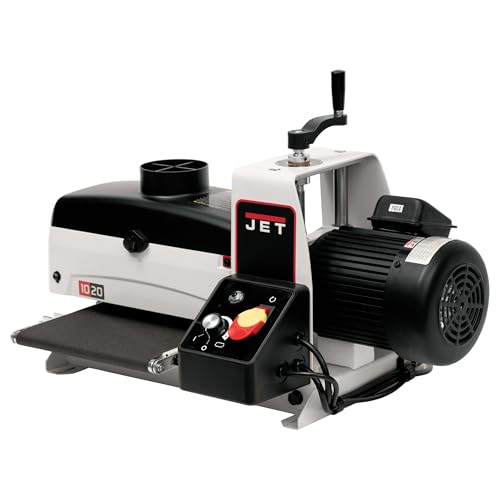
Single vs Double Drum Sanders for Batch Work
A double drum sander places two sanding drums along the feed path, allowing a planned two-stage abrasive sequence. A single drum keeps the sanding arrangement simpler but requires abrasive changes when the job calls for another grit. The better purchase depends on how consistently you repeat the same work.
As an Amazon Associate I earn from qualifying purchases. “Check Amazon” links are affiliate links.
A relevant product to inspect

Check exact model, included equipment and current seller details.
Check AmazonUnderstand the second drum
The second drum is another sanding stage, not a duplicate width opening. Powermatic lists an independently adjustable rear drum on the DDS-225. That adjustment matters because the rear abrasive must engage the work appropriately relative to the first drum; merely installing two different grits does not establish the correct relationship.
Read the exact manual for allowable grit combinations, height setup, and operation. Do not copy a rear-drum offset from a different model or assume a fixed setting will suit every paper thickness. A dual-drum purchase adds a useful capability and another setup relationship to manage.
Where batches favor two drums
If you routinely sand a stack of similar parts through the same abrasive sequence, two stages in one feed can reduce some handling and grit-change work. The potential advantage is strongest when the materials, widths, and required finish remain consistent enough to retain the setup.
Estimate the benefit using a whole production batch. Count abrasive changes, repeated feeds, inspection, and downstream sanding. Do not promise yourself twice the throughput from twice the drums: loading, extraction, stock removal, conveyor speed, and labor can constrain the result.
Where a single drum remains attractive
A shop alternating between occasional small repairs, unusual hardwoods, and one-off panels may benefit more from simple access and a smaller installation. If the required sanding sequence changes repeatedly, a dual-head setup can lose some of its batch advantage. A single drum also means only one wrap needs attention at a time.
Ease of abrasive replacement deserves a close look on either design. Ask to see the clamps and the working room around the drum. Consider your hands, visibility, and available service clearance. A theoretical time saving is less useful if routine wrap changes are awkward in the corner where the machine must live.
Check the complete product offer
Affiliate link. Confirm the version, specifications and included accessories before purchase.
Check AmazonAccount for the complete installation
Double-drum machines vary, but the category includes equipment with substantial power, extraction, and handling requirements. The DDS-225 is one specific 5 HP, 230 V single-phase example; that specification should not be generalized to every dual drum. Confirm the exact configuration instead of relying on a family name.
Ask for a written setup demonstration and consumables list. Compare the single-drum option with realistic abrasive-change time against the dual-drum option with realistic adjustment time. Also compare a wide belt if the justification is sustained production. Buy the second sanding stage when it removes a demonstrated bottleneck, not merely because two drums sound more capable. Final surface preparation may still remain after either machine, depending on the finish and visible scratch pattern.
Keep a batch worksheet
For recurring work, write down starting thickness, target thickness, grits used, number of feeds, and surface preparation after the machine. Use those records when discussing a demonstration. They give the supplier a concrete process to improve and keep your comparison focused on parts ready for the next operation.
Questions, answered
Can both drums use the same grit?
Follow the exact model manual. Whether useful or permitted depends on its adjustment system and the intended process; identical grits do not remove the need for correct setup.
Does a double drum replace all finish sanding?
No. The resulting scratch pattern and finish requirements determine what surface preparation remains.