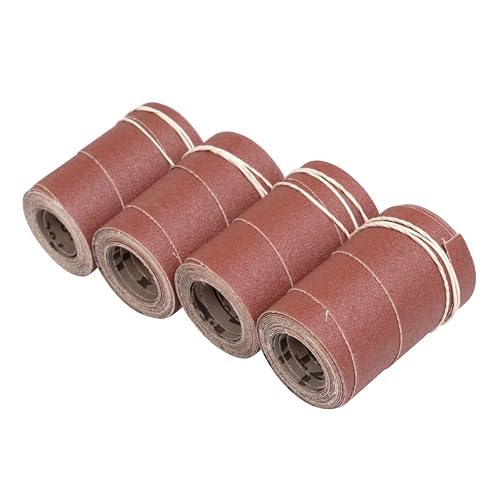
abrasives
Choosing Drum Sander Grit and Abrasive Material
Choose abrasive fit first, then grit and grain. A premium abrasive in the wrong wrap geometry or backing is not an upgrade. For a new machine, begin with the manufacturer-approved abrasive system and build a small, purposeful grit selection around your actual stock and finishing process.
As an Amazon Associate I earn from qualifying purchases. “Check Amazon” links are affiliate links.
A relevant product to inspect

Check exact model, included equipment and current seller details.
Check AmazonSelect grit by the work remaining
The starting grit should address the existing surface without creating unnecessarily deep scratches. Coarser abrasives have a role in substantial surface correction; finer grits are for refining the preceding scratch pattern. Do not start coarse simply because the machine can accept it.
A sequence such as 80, 120, and 180 can be a starting point to discuss for suitable work, not a universal recipe. Species, existing machining marks, removal allowance, abrasive grading, and finish instructions determine the sequence. Inspect after each stage rather than assuming a fixed number of passes removes the previous marks.
Compare grain without trusting color
Aluminum oxide, zirconia, and ceramic are abrasive grain families, not interchangeable quality grades. Benchmark Abrasives discusses their different behavior and applications. The complete product also includes backing, bond, coating, and intended working conditions; grain name alone does not predict useful life on your drum sander.
Buy a wrap specifically offered for the machine and woodworking application. Do not transfer performance promises from metal grinding or floor refinishing directly to a conveyor sander. Ask the supplier why a more expensive grain is suited to the pressure and material in your process before buying a large roll.
Check coating and backing
Open-coat and closed-coat describe abrasive coverage, not whether the machine has an open sanding end. More space between grains can be relevant to loading behavior, but coating choice still belongs to the complete abrasive specification. Read the product description rather than inferring it from the paper color.
The backing must tolerate the intended mounting system and operating conditions. Match strip width, end geometry, attachment style, and any specified material limitations. A bulk roll advertised for general sanding may not be an appropriate replacement even if it can be cut to similar dimensions.
Check the complete product offer
Affiliate link. Confirm the version, specifications and included accessories before purchase.
Check AmazonBuy enough to learn without overstocking
Start with the grits needed for a known job and keep a record of species, width, sequence, and observed surface quality. Compare consumable value through useful work and required rework, not simply feet of paper per dollar. Do not claim a lifespan multiplier without comparable use data.
Store abrasives as the supplier directs and label prepared wraps by machine and grit. Inspect the surface and abrasive when results change; a finer grit is not a cure for every streak, burn, or feed problem. Finish sanding remains a separate decision governed by the coating system and visible scratches. Build the abrasive selection around that final result, and expand it only when a recurring job provides a clear reason. This avoids paying for a large assortment whose grits or materials never suit the work.
Keep product families consistent when comparing
If evaluating two abrasives, note the maker, grit marking, backing, coating, and machine settings as well as grain type. Change one useful variable at a time and inspect the same kind of stock. Otherwise a better-looking result may reflect a different grit or a fresh wrap rather than the more expensive mineral.
Questions, answered
What grit should I finish with on a drum sander?
Use the finish maker guidance and inspect the resulting scratch pattern. There is no universal final drum grit, and further surface sanding may be needed.
Is ceramic always better than aluminum oxide?
No. Suitability depends on the full abrasive product and operating application, not the mineral name or price alone.