buying guides
Drum Sanders for Figured Wood and Veneer
A drum sander can be useful for abrasive work on figured lumber and suitable thin stock, but veneer demands a more cautious buying decision. A machine minimum-thickness figure is not a promise that every veneer sheet or veneered panel can be sanded successfully.
As an Amazon Associate I earn from qualifying purchases. “Check Amazon” links are affiliate links.
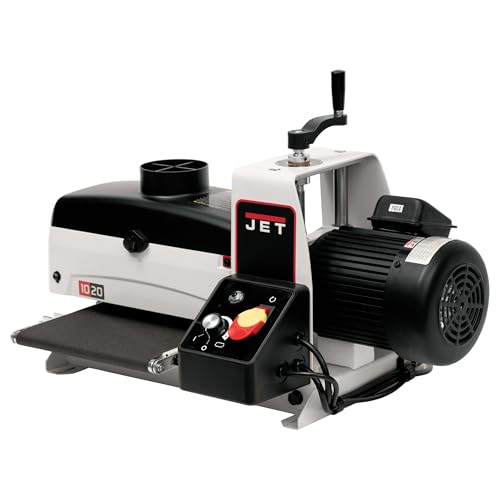
A relevant product to inspect

Check exact model, included equipment and current seller details.
Check AmazonSeparate three different materials
Figured solid wood, shop-sawn veneer, and a manufactured veneered panel present different problems. Figured lumber can contain grain reversals that complicate cutting. Shop-sawn veneer may need controlled thickness reduction. A veneered panel may have only a limited decorative layer remaining over its core.
Write down which job you actually need to perform. A machine that is useful for bringing substantial solid stock toward thickness does not automatically offer enough control for removing a defect from a thin factory-applied face. Sanding through that face can make the part unusable even if the machine itself operated normally.
Evaluate support and measurement
Thin or flexible material needs a documented handling method. Read the exact minimum thickness and length limits, and ask the manufacturer about your proposed stock. Where a carrier is permitted, follow its requirements; do not treat an improvised support as a universal exception to minimum stock limits.
Measure material at multiple positions before choosing a removal allowance. For veneered panels, establish the actual construction and available face thickness from the supplier when possible. If that information is unknown, do not promise yourself that a small handwheel change guarantees the decorative layer will survive.
Look beyond the thickness scale
A readable scale is useful for setup, but the resulting part thickness also reflects abrasive condition, support, adjustment, and the workpiece. Ask to see how the machine is calibrated and how the operator verifies output. Evaluate repeatability using measurements, rather than assuming the display resolution equals achieved accuracy.
Ask the seller to demonstrate representative offcuts, including the widest material you plan to process. Examine the surface for remaining defects and abrasive scratches. This proposed demonstration is particularly valuable for expensive figured wood because a generic test on straight-grained stock does not answer the same buying question.
Check the complete product offer
Affiliate link. Confirm the version, specifications and included accessories before purchase.
Check AmazonBudget for the entire finishing process
Start with enough suitable abrasive grits to remove the preceding scratch pattern without relying on aggressive removal late in the process. The final grit depends on the finish system and the intended surface. A drum sander can reduce repeated hand work while still leaving a need for subsequent sanding.
For figured solid wood, the purchase can be justified when difficult grain repeatedly consumes shop time. For shop-sawn veneer, support and thickness control deserve equal priority with width. For thin commercial veneers, first ask whether machine sanding is appropriate at all. If your only planned job is rescuing an unknown veneered surface, obtain material-specific guidance before buying a drum sander for it. The machine should serve a known process, not an assumption about how much wood remains.
Retain representative offcuts
Keep matching offcuts whenever the project permits. They let you evaluate the intended sanding and finish sequence before committing the visible component. Label them with the construction and starting thickness; an unrelated piece of the same wood species may not reproduce the risks of a thin face on a different substrate.
Questions, answered
Can I sand commercial veneer through a drum sander?
Not as a blanket recommendation. The face thickness, panel construction, support, and machine instructions must make the operation appropriate.
Does a drum sander eliminate tear-out concerns on figured wood?
Abrasive removal avoids a planer knife cutting action, but that does not make every piece damage-proof or remove the need to assess the resulting surface.