buying guides
How to Choose Drum Sander Width
Choose drum sander width around the panels you make repeatedly, then decide how to handle exceptions. The largest number in a model name may describe a two-pass capacity rather than the width sanded in one feed. Read the specification and operating procedure together.
As an Amazon Associate I earn from qualifying purchases. “Check Amazon” links are affiliate links.
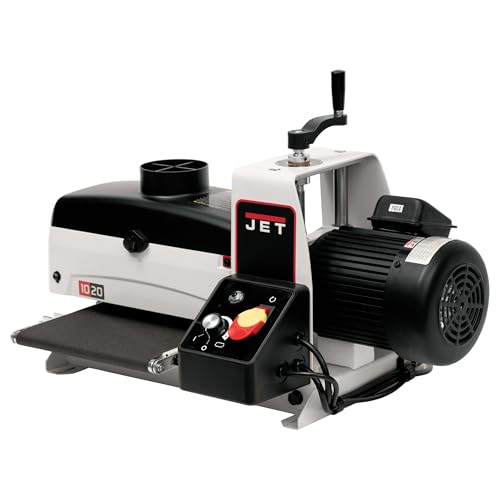
A relevant product to inspect

Check exact model, included equipment and current seller details.
Check AmazonBuild a workpiece list first
Write down the width, length, and thickness of ten representative finished parts and the blanks used to make them. Include glued panels at the sanding stage, which may be larger than their final trimmed dimensions. Separate weekly work from the occasional oversized project.
This list prevents two common mistakes: buying for a hypothetical maximum while ignoring daily handling, and buying just below the width used in almost every project. If a machine is narrowly too small for routine work, the repeated workaround may matter more than the initial saving.
Interpret single-pass and two-pass figures
A single-pass width describes the material covered in one traversal. An approved open-end two-pass procedure lets a wider panel project outside the drum and then be repositioned for its remaining area. SuperMax documents this distinction in the 19-38 manual. Check the exact permissible width instead of doubling a number yourself.
Two-pass work means managing overlap, alignment, and additional handling. Ask how the model is set up for that operation and whether returning to narrow-stock work requires another adjustment. Consider the weight and stiffness of your panel, not just its measured width.
Capacity has more than one dimension
Minimum workpiece length and thickness can rule out a machine even when the width is perfect. Look up those limits in the correct manual revision. Do not assume a short offcut can be fed safely because it fits beneath the drum or that a nominal thin-stock specification applies to every unsupported material.
Long work creates another constraint: the infeed and outfeed path must remain usable throughout the feed. Extension tables are helpful only within their intended purpose; very long or wide material may call for additional compatible support. Plan support without lifting or steering the work against the machine settings.
Check the complete product offer
Affiliate link. Confirm the version, specifications and included accessories before purchase.
Check AmazonCompare workload at useful width
Published width capacity is a geometric limit, not a guarantee that full-width stock sands at the same settings as a narrow strip. Material, grit, removal amount, feed, and extraction influence the workload. Ask a supplier to demonstrate the width you actually intend to use instead of accepting a narrow demonstration piece.
When two sizes both cover your recurring work, compare adjustment access, abrasive availability, utility demands, and installed footprint. For a rare exceptional panel, obtain an outsourcing quote before buying a substantially larger machine. For frequent large panels, value single-pass handling honestly. A clear choice emerges when width, stock limits, and workflow all refer to the same real projects, rather than to unrelated maximum specifications.
Leave room for blank preparation
Allow for the width of the stock when it reaches the sander, including glue-up edges and any trimming allowance. A nominally sized finished panel may begin as a wider blank. Ask whether your process can reasonably trim first, or whether the sanding machine must accommodate the larger intermediate piece.
Questions, answered
Does 19-38 mean a 38-inch drum?
For the SuperMax 19-38, the wider figure refers to the documented two-pass capacity, not a 38-inch-long sanding drum.
Should I buy the widest sander I can afford?
Only when that width serves your work and the complete installation fits. Dust collection, access, support, and consumables also consume budget and space.