troubleshooting
Drum sander burn marks: find the source before another pass
A burn mark is evidence that the sanding process needs attention. Before trying to erase it, determine whether the discoloration covers the whole face, follows one narrow lane, or appears where the board paused. Those patterns suggest different next checks. Repeated passes with the same setup can deepen the mark while making the board too thin to save.
As an Amazon Associate I earn from qualifying purchases. “Check Amazon” links are affiliate links.
A relevant product to inspect

Check exact model, included equipment and current seller details.
Check AmazonRead the pattern
Photograph the face in good light and mark the feed direction on its edge. A stripe that stays in the same machine lane on different boards points toward something localized at the abrasive or drum. A broad change across the face is more consistent with the overall sanding conditions. A crosswise patch near a hesitation makes the feed event especially relevant. These are diagnostic clues, not proof of a failed component.
Check whether you are looking at burning rather than natural color, glue residue, or a previous machining mark. Compare the unsanded offcut, if available. Do not use the finished project as the test piece while that distinction remains uncertain.
Inspect before changing settings
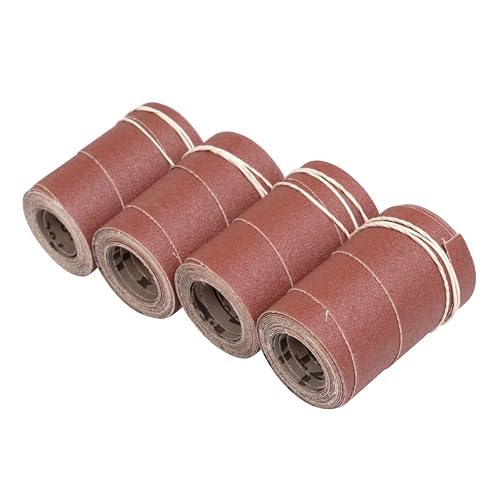
Stop, wait for all movement to cease, and unplug before opening the cover or inspecting the wrap. Look for a concentrated deposit, damaged backing, a raised edge, or an area that looks unusually polished. Record where it sits relative to the mark on the board. Do not run a loose or torn wrap to see whether it improves.
The JET bench-top manual identifies reducing depth and trying a faster feed as possible responses to burning. That is not a universal dial setting: model, grit, wood, and width determine the useful range. Restore a sound abrasive and working dust collection first so a setting change is not masking another problem.
Check the complete product offer
Affiliate link. Confirm the version, specifications and included accessories before purchase.
Check AmazonRun one controlled comparison
Use flat scrap of similar wood and suitable dimensions. Follow your manual to establish a light initial contact; keep guards closed during sanding. Compare one change at a time, recording abrasive condition, feed setting, and the board width. A narrow sample that succeeds does not establish a safe production setting for a much wider panel.
Do not automatically slow the conveyor to improve the finish. A slower pass also changes how long the surface is exposed to sanding. If the board hesitates or the machine labors, stop the trial and investigate feed or load instead of adding hand pressure. Never pull a stalled workpiece through an operating machine.
Decide whether the board is recoverable
Measure remaining thickness before removing the discoloration. A shallow mark may clean up during a corrected sanding sequence, but a deeper mark may consume an unacceptable amount of material. Check both faces and the required joinery dimensions. A cosmetically clean surface is not a successful repair if it no longer fits.
Save the test results with the job notes. Record what actually eliminated the mark rather than assuming the last control touched was the cause. If a localized stripe returns with a properly installed new wrap, ask the manufacturer to help investigate the drum or its support before making structural adjustments.
Questions, answered
Should I use finer paper to remove burning?
Choose the next abrasive for the remaining defect and thickness allowance. Finer paper is not an automatic cure for heat or a loaded wrap; correct the cause on scrap first.
Is a darker stripe always a bad bearing?
No. The mark alone cannot identify a bearing fault. Its location, repeatability, abrasive condition, and any unusual noise are more useful evidence for service support.