troubleshooting
Motor overload and feed stalls: what to check first
An overload trip or stalled feed is a reason to stop and understand the event. Resetting repeatedly can destroy the evidence and expose the machine to the same fault again. Record whether the drum stopped, the conveyor stopped, both stopped, or an automatic feed system slowed the board while the drum continued running.
As an Amazon Associate I earn from qualifying purchases. “Check Amazon” links are affiliate links.
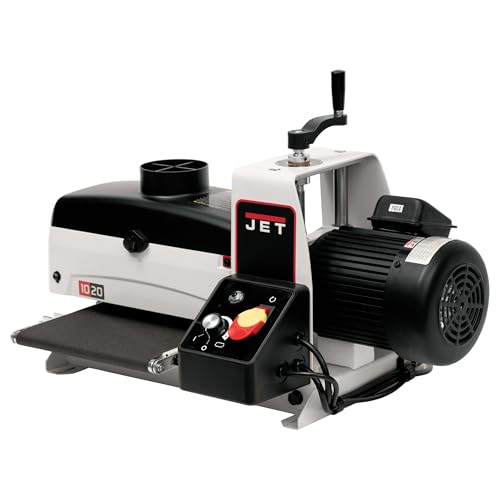
A relevant product to inspect

Check exact model, included equipment and current seller details.
Check AmazonMake the stopped machine safe
Switch off, wait for complete stop, and disconnect power before clearing a workpiece or inspecting the sanding area. Use the manual’s method for relieving contact. Do not pull a board from under a rotating drum, bypass a switch, or hold a reset button in place.
If you notice smoke, an electrical smell, damaged wiring, or unusual heat, keep the machine out of service and obtain qualified help. A workpiece that was difficult to feed is useful information; it is not enough to declare the event a harmless overload.
Reconstruct the pass
Write down the wood, width, grit, starting thickness, and control settings. Include whether the abrasive was new, loaded, or damaged. Ask whether the event occurred at initial contact, at a raised glue joint, or during a long continuous pass. A wider board can make a previously successful setup a poor comparison.
If the model has automatic load sensing, read what its indicator and feed behavior actually mean. A slowdown, a thermal trip, and a failed drive are different events. Avoid calling every change in conveyor speed a motor failure, but do not assume every stopped conveyor is an intentional control response.
Check the complete product offer
Affiliate link. Confirm the version, specifications and included accessories before purchase.
Check AmazonCheck the permitted power setup
Compare the nameplate and exact manual with the supply arrangement. Have electrical questions addressed by a qualified person. Do not increase a breaker size, change the plug, or rewire a motor based on advice for a similarly named machine.
The manufacturer-hosted SuperMax 19-38 manual explicitly prohibits converting that model to 220 volts. That model-specific restriction illustrates why a generic recommendation to change voltage is inappropriate. Different revisions and machines can have different electrical requirements, and a higher-power circuit is not a cure for a mechanical obstruction.
Restart only after identifying a plausible cause
Follow the specified cooldown and reset sequence, with the obstruction removed and guards restored. If the event followed an excessive sanding demand and inspection finds no damage, establish a conservative test on suitable scrap using the manual’s operating procedure. Change one variable at a time and observe from the normal operating position.
Stop if the trip repeats under an ordinary light test or if the drive behaves intermittently. Give support the exact event sequence and any indicator behavior. Avoid dismantling controls to search for a loose wire. A useful service report distinguishes what you observed from what you suspect and includes the machine’s serial number and manufacture date.
Questions, answered
Is a slowdown always an overload?
No. Some machines regulate feed automatically, while others have different control behavior. Identify the exact model and read its indicator description.
Can I keep resetting until the board comes through?
No. Remove the workpiece using the stopped, disconnected procedure and investigate the cause before another test.