comparisons
JET JWDS-1020 vs JWDS-1632: Bench or Stand?
Choose the JET JWDS-1020 when your ordinary parts fit within ten inches and a properly mounted bench installation suits the shop. Choose the JWDS-1632 when eleven-to-sixteen-inch assemblies are recurring work or you need its wider documented two-pass allowance. This comparison uses manufacturer documentation and the exact linked offers; it does not report hands-on testing.
As an Amazon Associate I earn from qualifying purchases. “Check Amazon” links are affiliate links.
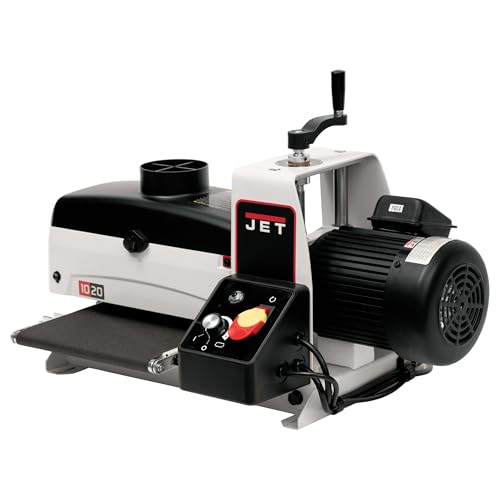
Confirm the exact version and included equipment.
Check Amazon
Confirm the exact version and included equipment.
Check AmazonSide-by-side buying comparison
A missing specification is not an unlimited capacity. Check the exact manual, model generation and seller package.
| Decision point | JET JWDS-1020 drum sander | JET JWDS-1632 drum sander |
|---|---|---|
| Single-pass width | 10 in | 16 in |
| Documented two-pass width | 20 in | 32 in |
| Minimum stock thickness | 0.03125 in | 0.03125 in |
| Maximum stock thickness | 3 in | 3 in |
| Minimum stock length | 2.375 in | 2.375 in |
| Documented supply voltage | 115V | 115V |
| Documented dust airflow | 550 CFM | 400 CFM |
| Current Amazon offer | Check Amazon | Check Amazon |
Specifications are documented limits, not our test results. Supply voltage does not establish phase or circuit suitability.
The width difference changes everyday handling
JET documents ten inches in one pass and twenty in two for the JWDS-1020, compared with sixteen and thirty-two inches for the JWDS-1632. A fourteen-inch panel therefore illustrates a real distinction: it fits within the 1632 single-pass width but requires the 1020 approved wider-panel procedure. A twenty-four-inch panel exceeds the smaller machine documented maximum altogether.
Count how often those situations occur in your work. For narrow drawer parts and small box components, the larger opening may do little to simplify the process. For a repeated batch of medium glue-ups, avoiding repositioning is a more concrete benefit than simply owning the higher model number. Allow for the blank width before final trimming.
Their shared stock limits still need attention
Both manuals establish a 1/32-to-three-inch thickness range and a 2-3/8-inch minimum length. The larger machine therefore expands width without adding a taller thickness opening in this comparison. Neither minimum-thickness number is blanket permission to feed fragile loose veneer: the applicable support or carrier instructions and material suitability remain part of the decision.
The US manuals identify a one-horsepower drum motor on the 1020 and a 1-1/2-horsepower drum motor on the 1632. Those ratings describe equipment, not verified production rates. Wood species, engaged width, grit, abrasive condition, and removal amount prevent a simple horsepower ratio from predicting how quickly a finished batch will leave your shop.
The smaller sander does not have the lower CFM figure
Both documented US machines use 115V power and a four-inch dust connection. However, the cited 1020 manual recommends 550 CFM, while the current shared 1632/1836 manual specifies 400 CFM minimum extraction. Do not overwrite those different manual figures with an assumption that the smaller machine must need less collection. The 1632 documentation also recommends a 20A circuit.
Assess the proposed collector with the actual hose route and restrictions. A matching port diameter does not establish adequate delivered airflow. Check the machine nameplate and applicable electrical instructions for the exact unit you receive, and account for the collector operating simultaneously when planning shop power.
Check the complete product offer
Affiliate link. Confirm the version, specifications and included accessories before purchase.
JET JWDS-1020 drum sander
Check AmazonJET JWDS-1632 drum sander
Check AmazonBench space and floor space are different costs
The 1020 is a benchtop installation. Include a suitable mounting surface, usable feed height, and access to the hood and abrasive clamps. If it occupies the only assembly bench, its apparent compactness may cost more useful shop space than expected. Benchtop also says nothing by itself about how conveniently you can lift or store the machine.
The linked 1632 offer is for the stand-mounted model. Confirm the package contents rather than treating extension tables or mobility hardware in a photograph as included. Sketch each complete station with your longest blank entering and exiting. Space for receiving the stock and bringing it back for another pass matters as much as the base dimensions.
Price ownership around the exact abrasive system
Request a ready-to-use quote that includes the support arrangement, appropriate extraction connections, useful abrasive grits, and delivery or collection. Compare wrap prices by the correct model fit. A roll width or shared JET branding does not prove that precut strips, conveyor belts, or mounting details interchange between these machines.
Ask to see the wrap attachment points and the model-specific conveyor maintenance procedure before purchase. These are tasks you will eventually perform, so visibility and service clearance deserve attention. For either exact offer, verify US configuration, accessories, warranty terms, and returns with the seller. This guide provides no live price ranking because a bare machine price cannot settle those package differences.
Final choice: buy for the width you repeat
Choose the 1020 if almost every part stays within ten inches, the occasional wider job remains within twenty, and the bench installation is genuinely convenient. Choose the 1632 if normal assemblies fall between ten and sixteen inches or regularly exceed the smaller machine maximum. The gain is documented working room, not a guaranteed improvement in finish quality.
If both meet your project list, ask for a demonstration using the same wood and target surface. Inspect thickness across the result and the remaining sanding required before finishing. If nearly every planned panel exceeds sixteen inches, compare the next width class as well; buying the 1632 only to use two-pass handling constantly may not be the best long-term fit.
Questions, answered
Does the JWDS-1020 sand twenty inches in one pass?
No. Its documented single-pass width is ten inches. Twenty inches requires the manufacturer two-pass procedure.
Which one has the lower documented extraction requirement?
The current cited JWDS-1632 manual lists 400 CFM minimum, while the JWDS-1020 manual recommends 550 CFM. Verify the applicable revision and your installed collection system.
Can the 1632 accept thicker stock than the 1020?
Not by the documented capacity here. Both have a three-inch maximum thickness and a 1/32-inch minimum, subject to their operating instructions.