models
WEN 65911 buyer guide
The WEN 65911 is a conveyor woodworking drum sander aimed at relatively narrow stock. Its ten-inch marketing name should not be read as a guaranteed ten-inch workpiece opening. A more significant buying issue is that WEN’s product page and linked manual give different capacity numbers. This guide keeps that uncertainty visible.
As an Amazon Associate I earn from qualifying purchases. “Check Amazon” links are affiliate links.
Compare a different documented model
No exact Amazon offer has been matched to this guide. This is a different machine.

Check exact model, included equipment and current seller details.
Check AmazonWho should consider it
Consider the 65911 for parts comfortably inside its conservative published envelope, such as narrow boards and modest glued components. It is a poor machine to select on an assumption about thin veneer or an open-end doubling trick. Before buying near any limit, obtain written confirmation of the specifications for the machine revision the seller will ship.
Published capacity and what it means
The product page states 9-1/2-inch maximum width and 1/4-to-3-inch thickness. Its linked 2019 manual instead gives 9-7/8-inch width and 3/16-to-3-1/8-inch thickness, plus 4-3/4-inch minimum length and 3/4-inch minimum width. Our comparison data uses the more conservative page envelope. The manual specifies 120V, and both sources identify a 4-inch dust connection.
The detail that changes the decision
The discrepancy is material for a buyer whose panel is just under ten inches or whose thin stock falls between the two stated minimums. Do not resolve it by choosing whichever number makes the purchase work. WEN’s own sources also differ on drum-speed information. Those conflicts are a reason to verify the exact unit, not evidence of performance we have measured.
Inspect the alternative offer
Affiliate link. Confirm the version, specifications and included accessories before purchase.
Check AmazonPlan the complete purchase
The page describes rolling-stand and bench installation possibilities; ask what the exact purchase includes and how it will be assembled. Determine the abrasive product and replacement conveyor availability before checkout. A low-cost machine is easier to own when consumables can be obtained without a long investigation. Do not assume another brand’s similar-looking wrap or conveyor will fit.
Include consumables and setup time in the budget. Price several useful abrasive grits, the correct dust hose and fittings, a reliable thickness gauge, and whatever stock support your layout requires. Ask how returns work after assembly and who supplies replacement wear parts. A quote that answers those questions is more useful than a bare advertised price, especially when two sellers offer different packages under the same model name.
Set a baseline in your own shop
Before your first valuable piece, make a simple acceptance sample from sound scrap that meets all of the confirmed stock limits. Mark its starting thickness in several locations, use a conservative sanding setup, and inspect the surface under angled light. Keep notes on the abrasive and material. This creates a repeatable reference for your own machine without assuming a manufacturer specification promises a particular finish.
Compare the nearest alternatives
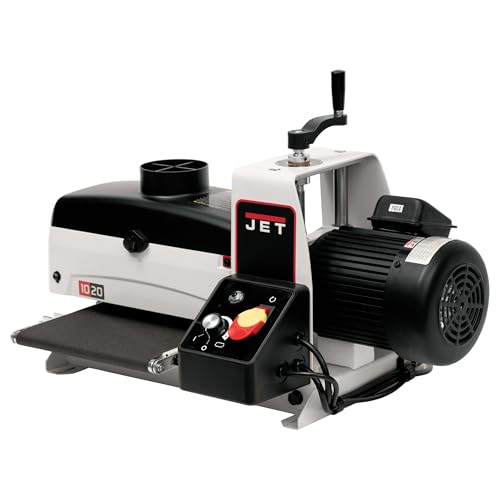
Compare with the Grizzly G0716 for a similar narrow-stock brief and with the JET JWDS-1020 when documented two-pass width or thinner material is important. These are not interchangeable ten-inch machines. The WEN can remain a sensible candidate when your parts sit comfortably inside confirmed limits and the complete purchase meets your budget.
Questions, answered
Can it handle a full ten-inch-wide board?
Do not assume so. The page states 9-1/2 inches; the linked manual says 9-7/8 inches. Confirm the revision before buying for stock near the limit.
What does an unknown dust CFM value mean?
A verified numeric airflow requirement was not found in the reviewed WEN documentation. It does not mean dust collection is unnecessary.