models
Grizzly G0459 buyer guide
The Grizzly G0459 offers a twelve-inch sanding width in a bench-oriented woodworking machine. The key selection issue for beginners is often the other end of the specification sheet: minimum length, width, and thickness. This guide uses the official G0459/G0459P manual and does not report hands-on surface measurements.
As an Amazon Associate I earn from qualifying purchases. “Check Amazon” links are affiliate links.
Compare a different documented model
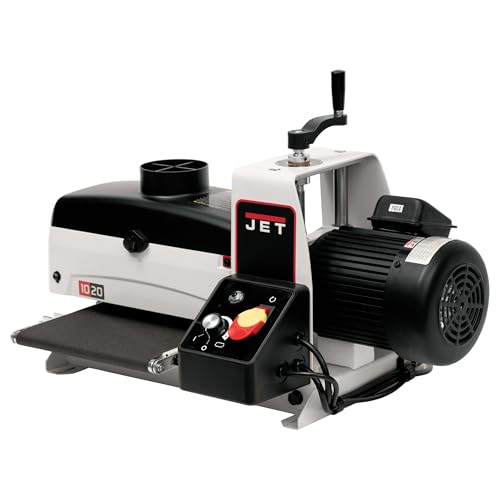
No exact Amazon offer has been matched to this guide. This is a different machine.

Check exact model, included equipment and current seller details.
Check AmazonWho should consider it
The G0459 is worth considering when your work is narrow enough for its fixed capacity but too broad for a smaller nominal ten-inch machine. Think in terms of complete pieces, not just maximum width. A small rectangular blank might fit the opening while still being too short or too narrow for the documented feeding requirements.
Published capacity and what it means
The official manual specifies 12-inch maximum width, thickness from 1/8 to 3-1/2 inches, an 8-inch minimum length, and a 2-inch minimum width. US power is 115V. The dust connection is 2-1/2 inches, with 150 CFM recommended at the port. We have not verified a doubled two-pass capacity, so no 24-inch rating is assigned.
The detail that changes the decision
Eight inches is a consequential minimum for small project makers. Compare the size of the blank during sanding with the final part size: planning a longer blank and cutting it later may be possible in some projects, while others require sanding an already finished short part. Work out that sequence before treating the machine as a universal small-shop sander.
Inspect the alternative offer
Affiliate link. Confirm the version, specifications and included accessories before purchase.
Check AmazonPlan the complete purchase
The smaller dust connection should be evaluated using the manufacturer’s at-port airflow requirement rather than a collector’s advertised free-air number. Read the manual’s mounting arrangement and plan a stable supporting bench. A bench that also holds assembly work may need to be dedicated during sanding, so account for the lost work surface when comparing with a stand-mounted alternative.
Include consumables and setup time in the budget. Price several useful abrasive grits, the correct dust hose and fittings, a reliable thickness gauge, and whatever stock support your layout requires. Ask how returns work after assembly and who supplies replacement wear parts. A quote that answers those questions is more useful than a bare advertised price, especially when two sellers offer different packages under the same model name.
Set a baseline in your own shop
Before your first valuable piece, make a simple acceptance sample from sound scrap that meets all of the confirmed stock limits. Mark its starting thickness in several locations, use a conservative sanding setup, and inspect the surface under angled light. Keep notes on the abrasive and material. This creates a repeatable reference for your own machine without assuming a manufacturer specification promises a particular finish.
Compare the nearest alternatives
The G0716 has a different usable width and different stock minimums; its model number is not a shortcut to compatibility. Compare with the JET JWDS-1020 if open-end capacity or very thin material drives the decision. The G0459’s appeal is a specific twelve-inch working envelope, provided your stock dimensions and installation plan fit it.
Questions, answered
Can the G0459 sand a 24-inch panel in two passes?
No manufacturer-confirmed 24-inch two-pass capacity is used here. Treat it as a twelve-inch-capacity machine.
Can I feed a six-inch-long blank?
That is below the cited manual’s eight-inch minimum length. Do not feed it directly; select another supported process or obtain manufacturer-approved guidance.